"Nothing comes close to an excellent voice"
28.11.2025,
The cornett was particularly popular in the 17th century, by the time of Johann Sebastian Bach it was already outdated. Bach used the instrument, which he called "cornetto", in the chorale cantatas of his first years in Leipzig, mostly to reinforce the chorale melody, as well as in ensembles with three trombones.
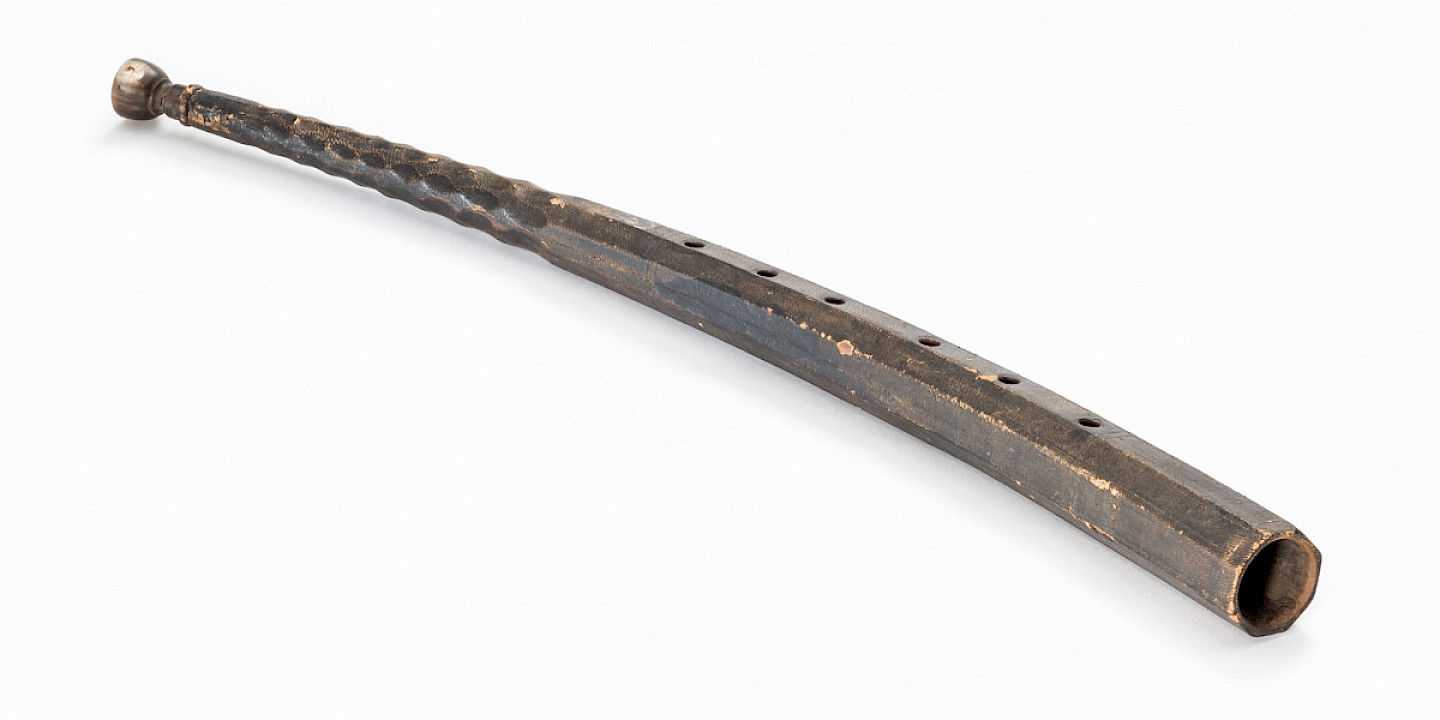
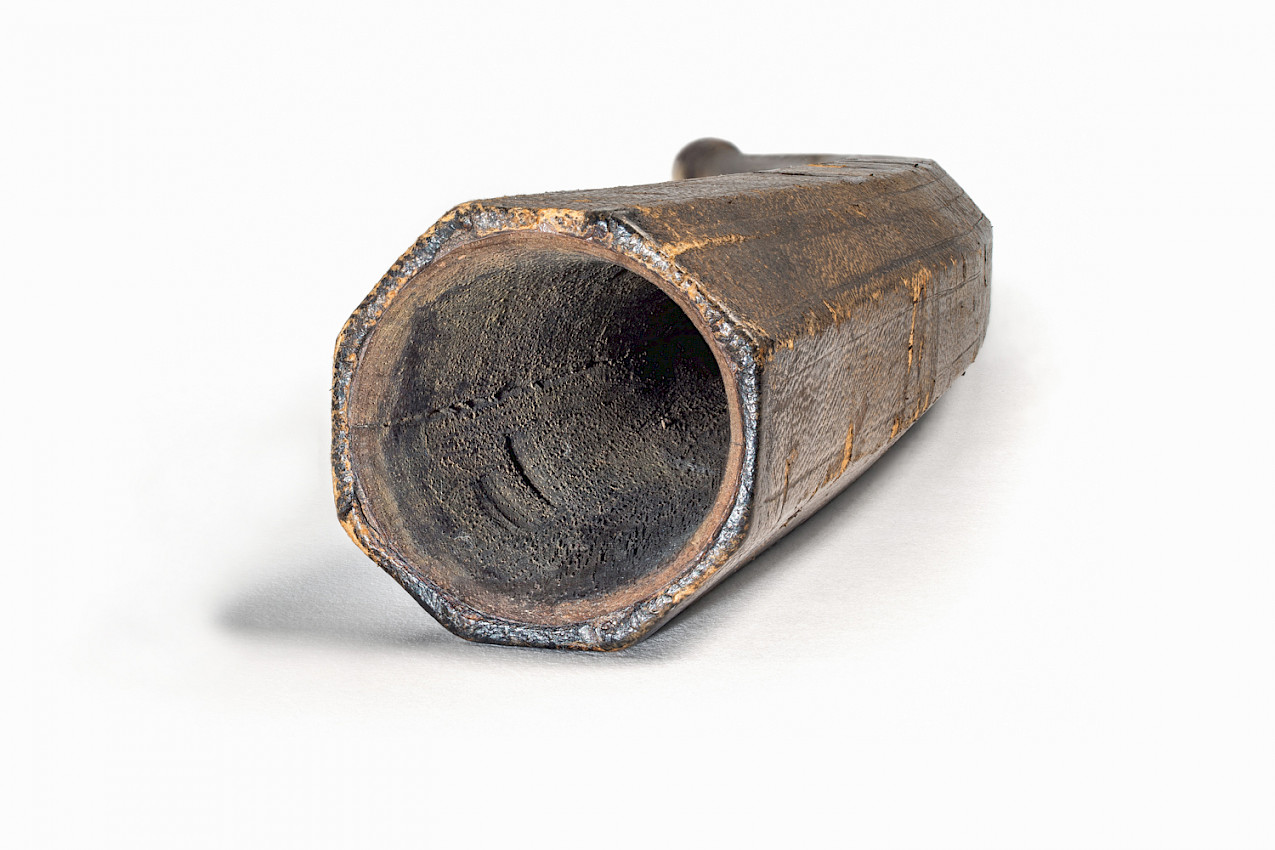
The instrument in the Deutsches Museum is a "Krummer Zink". It has an octagonal body that is bent to the right. Inside you can see that it is made of two parts that were glued together and covered with leather. The cup-shaped mouthpiece is made of horn and corresponds to a small trumpet mouthpiece. It is not known when the instrument was made, as tines are generally neither signed nor dated and therefore lack any clues.
Tines have six finger holes on the front and a thumb hole on the back and can therefore be played chromatically and virtuosically over the entire range. Their sound is similar to that of the human voice. "Nothing comes as close to an excellent voice as a cornett", wrote the lawyer and music writer Roger North.
The cornett was one of the instruments used by the Leipzig town pipers who played in church music. It was usually played by them as a treble instrument, i.e. as the highest voice, often carrying the melody, in an ensemble with three trombones, as Bach also intended in some of his works.