Coffee – Cantata – Colonies
29.11.2025,
It is impossible to say with certainty how many goods from distant lands Johann Sebastian Bach came into contact with; ivory was certainly among them, as was coffee, to which he even dedicated a cantata, BWV 211. When Bach died in 1750, the European colonial powers of the time had brought large parts of North America, enormous coastal areas of India, West and East Africa as well as some islands in Indonesia, Taiwan and the Philippines under their rule after Latin America. As people all over the world have done for thousands of years, music was also played in these countries, and numerous musical instruments arrived in Europe on the ships of the colonial rulers: first in the "cabinets of curiosities" and cabinets of curiosities of the royal courts, and later in museums.
The two instruments selected here come from "coffee regions":
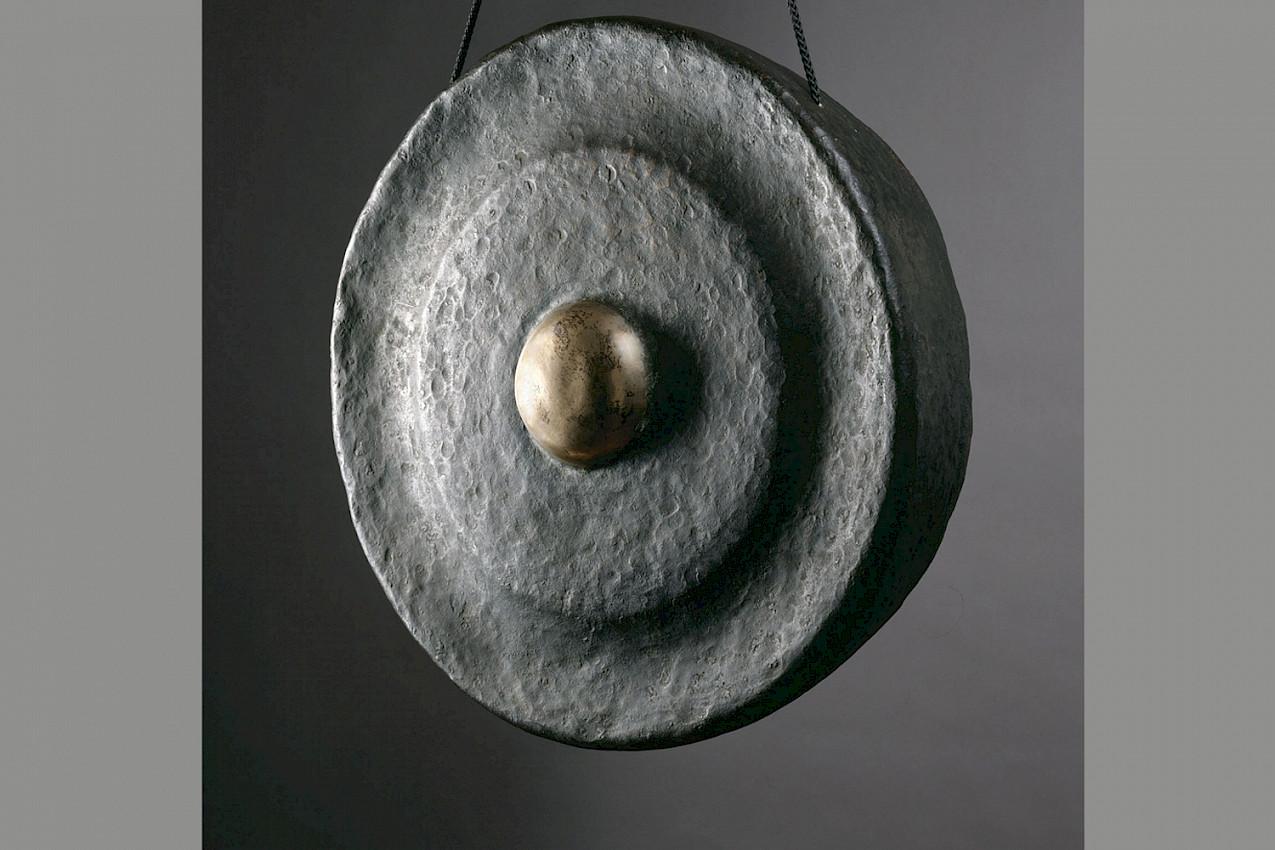
During Bach's lifetime, the majority of the stimulant was imported by the Dutch from Java, where gongs like the one pictured above, a so-called humpback gong, had been in use for centuries.
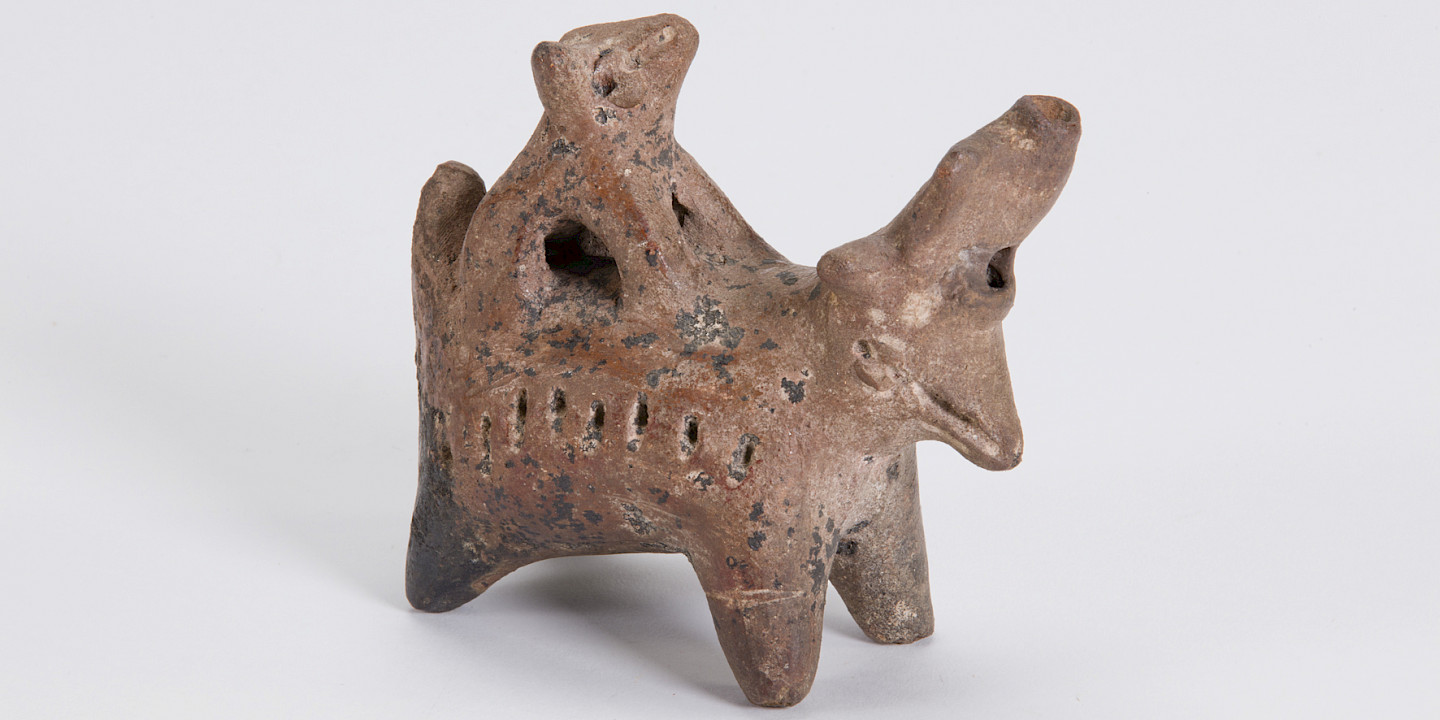
In the 18th century, as demand increased, coffee cultivation shifted more towards Latin America: this clay combination of vessel flute and rattle originates from the Aztecs in what is now Mexico.
The journey of the instruments on the ships of the colonial rulers was often not voluntary, but was based on the same injustice contexts as the colonial goods that were also traded in the trade fair city of Leipzig in Bach's time. The origin of some of the musical instruments in the Munich City Museum from colonial contexts is currently the subject of intensive research.