From the street to the French court
21.11.2025,
Did Johann Sebastian Bach know the hurdy-gurdy? If he did, then he probably encountered it as an instrument played by beggars or street musicians. Because unlike in France – and despite all the French fashions and dances here in Germany – this instrument did not manage to establish itself in the social "upper class" in Germany.
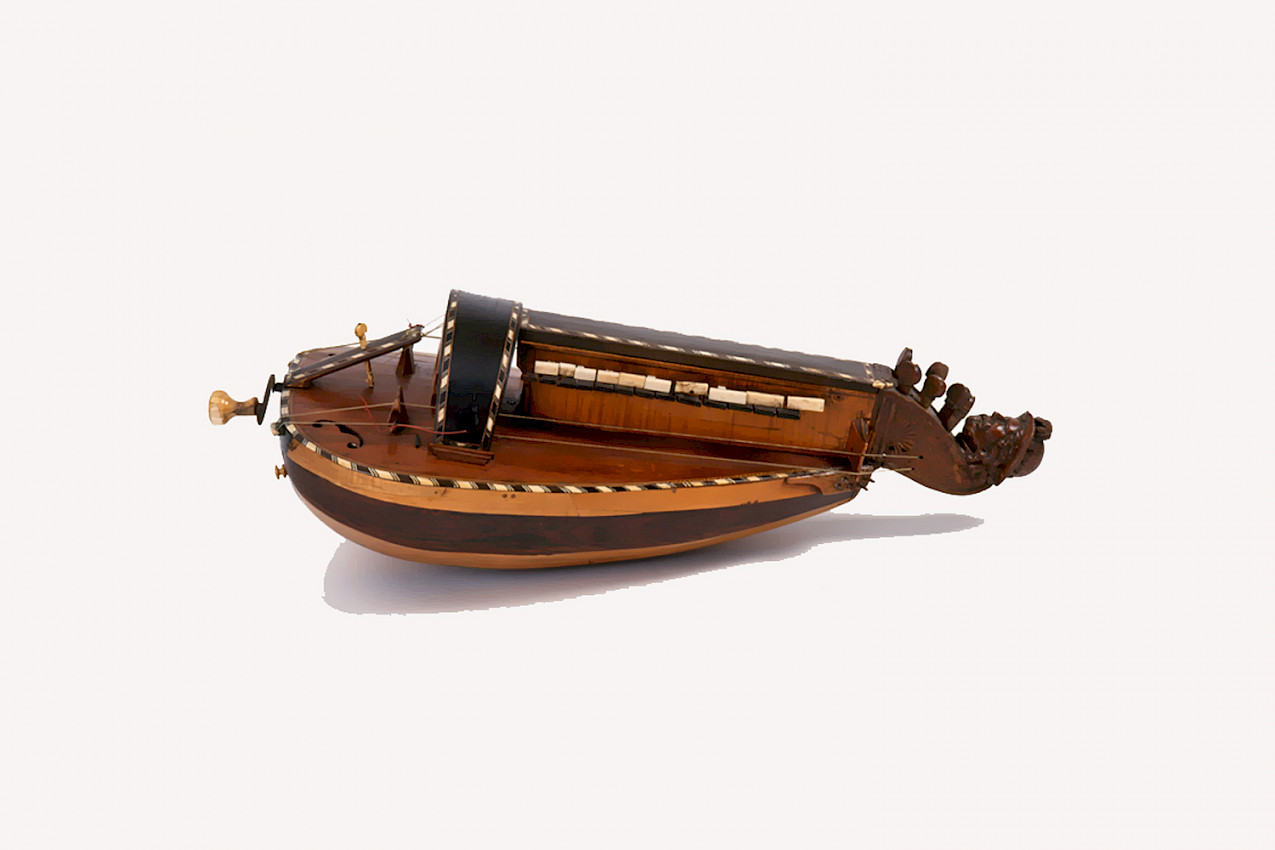
Before the hurdy-gurdy was "ennobled" in this way, it already had a long tradition in France: easy to transport and penetrating in sound, this string instrument with drone or snare strings is ideal for traditional folk and dance music. In the 18th century, when the French aristocracy began to take an interest in the supposed idyll of the rural population, in particular the life of shepherds, which was described as "Arcadian", the associated music also became a centre of interest in the context of staged pastoral plays. With this rise to the upper echelons of society, the Vielle à roue also adapted its appearance: This magnificently crafted lute from around 1740 clearly shows that the Parisian workshop of Pierre Louvet produced the highest quality instruments for the court of Louis XV and his entourage – the simple country folk would not have been able to afford such a precious hurdy-gurdy: with a delicately carved head, ivory inlays and the skilfully carved lute back.