Lovely-pompeus and en vogue
25.11.2025,
In 1713, Johann Mattheson characterised the French horns as "lieblich-pompeus" in his "Neu-eröffnetes Orchestre" and wrote that they were "bey itziger Zeit sehr en vogue kommen / so wol was Kirchen= als Theatral= und Cammer=Music anlanget". Johann Sebastian Bach had only rarely used horns before he came to Leipzig. There, however, he did so in more than 50 works, in ensembles of two or three instruments, but also as a soloist.
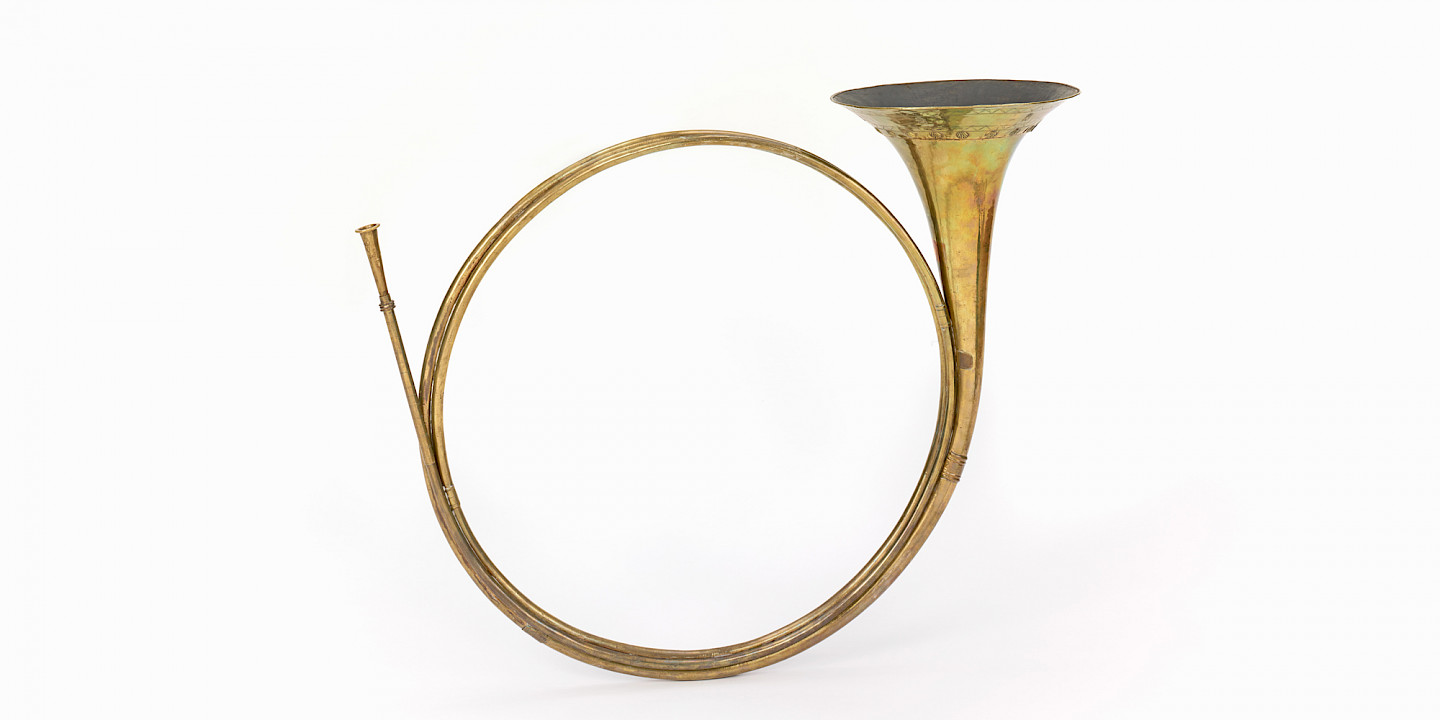
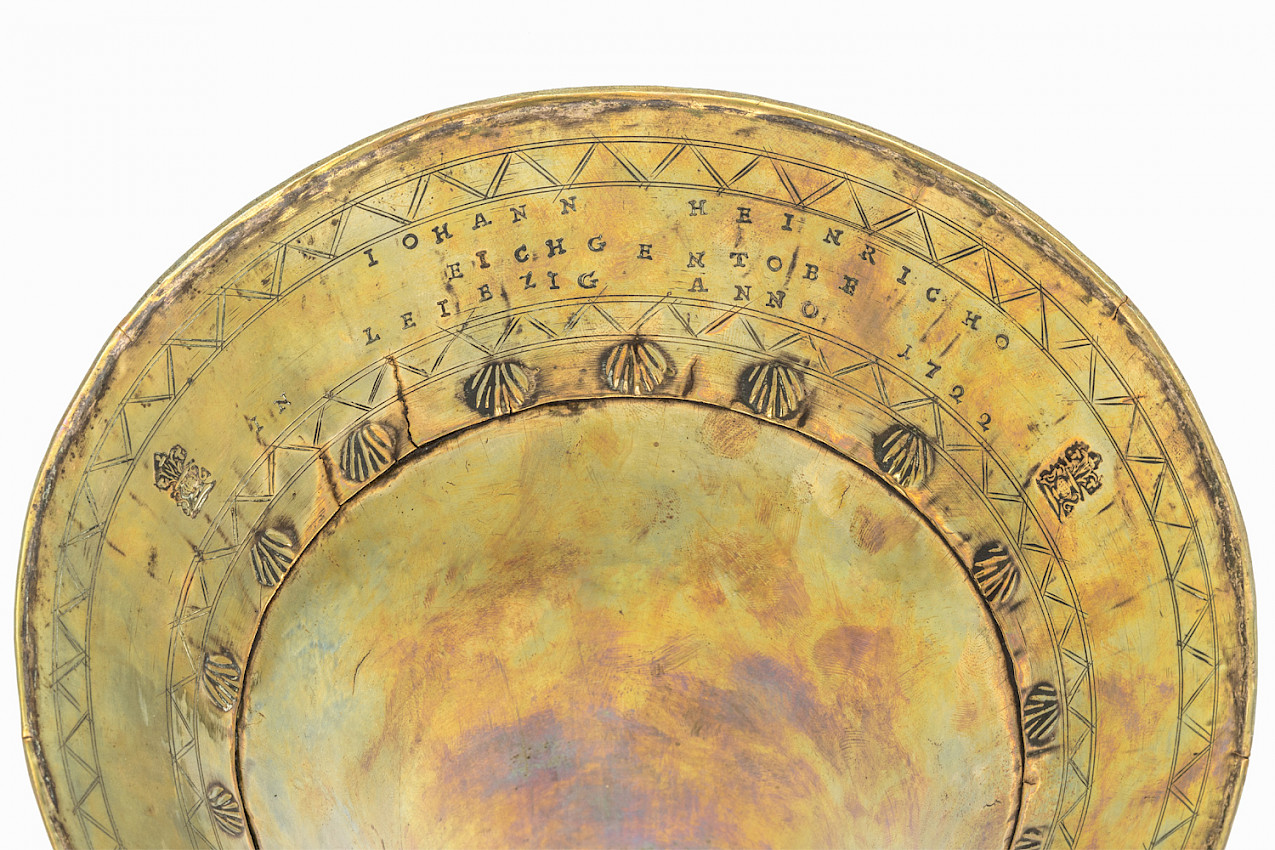
The Deutsches Museum houses a horn that Johann Heinrich Eichentopf made in Leipzig in 1722, one year before Bach came to Leipzig. Eichentopf worked there as an instrument maker from around 1710 and made both woodwind and brass instruments. This instrument is the oldest of the five surviving horns made by his hand.
With a diameter of more than 60 centimetres and the conical tube, which is four metres long and has two windings, it corresponds to the modern form of the time, which was created in France at the end of the 17th century. Like all brass instruments of the time, it has no valves – these were not invented until the 19th century. The tone sequence was limited to the natural tone series. The different tones were produced by changing the air pressure and lip tension.