Saxon light music in Bach's time
24.11.2025,
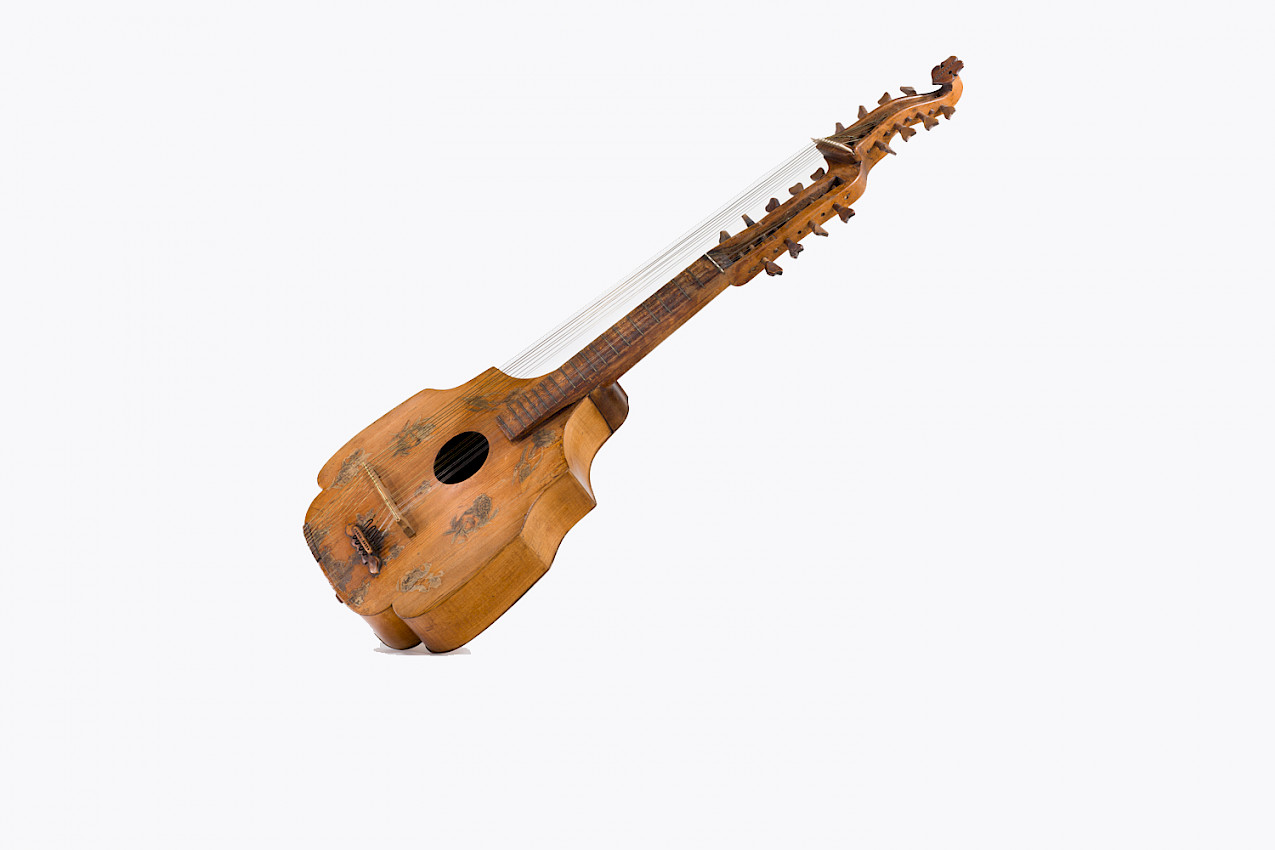
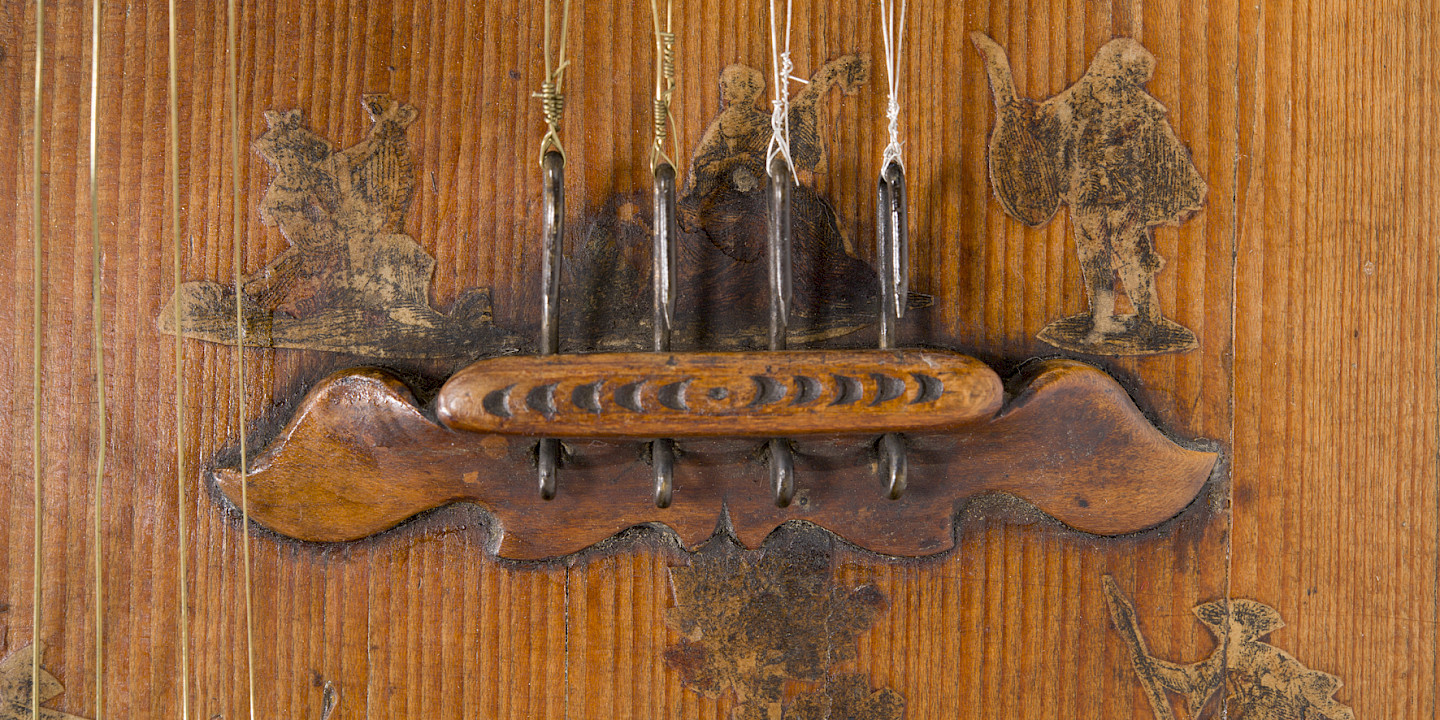
A curious instrument is the theorbo cittern, which, like its little sister, the cittern, was played by the miners' bands of the Saxon and Bohemian Ore Mountains – even up until the 18th century, citterns, together with the triangle, were the only instruments permitted to these popular musicians. This instrument was built by Johann Gottfried Vogel in Eppendorf in Saxony around 1700. The flowers and figures cut out of copperplate engravings and glued onto the instrument convey the informal habitus of this musical tradition.
The cittern never made it to higher ranks: as an amateur instrument played by the upper and lower classes, it was the typical instrument of miners' bands. When ore exploitation declined in the 16th century, many of these ensembles, which were initially internal to the corporation, shifted to playing entertainment and dance music in public and in inns, travelling closer and increasingly further afield: from Saxony to overseas in the 19th century. Wherever people came together, there were opportunities to earn money. For example, the "Bergsänger" played an important role in the musical ambience at trade fairs in Leipzig, but also in Frankfurt am Main.